See it running
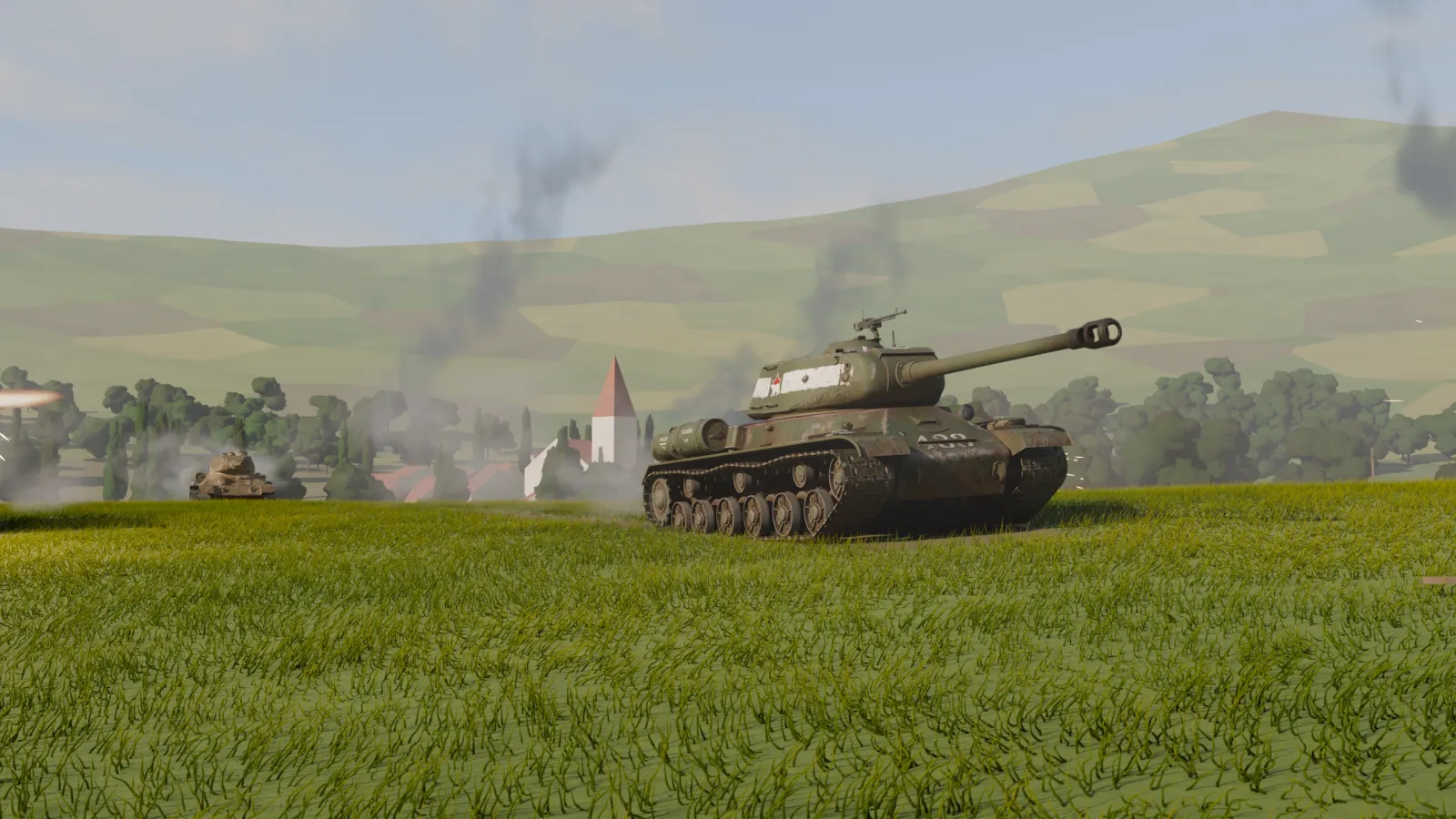
No pre-rendered cutscenes. Everything you see runs in the engine, in real time.

The vehicles
Every vehicle you'll drive actually existed, prototype, technical demonstrator, or complete mockup, never pure fiction. In the main gamemodes, if it's on the field, it once rolled off a factory floor, or came close.
KV-1E
Unkillable in 1941: shells bounce off the appliqué plates. Its 76 mm no longer punches through much head-on, so it soaks up fire while the others finish.
SU-100
The Soviet compromise: a 100 mm that punches through almost anything, on a chassis quick enough to reposition. With no turret, aiming goes through the tracks.
M36B2
A 90 mm bolted onto a paper chassis. Open turret, token armour: it shoots first and pulls back before the answer comes.
Tiger I
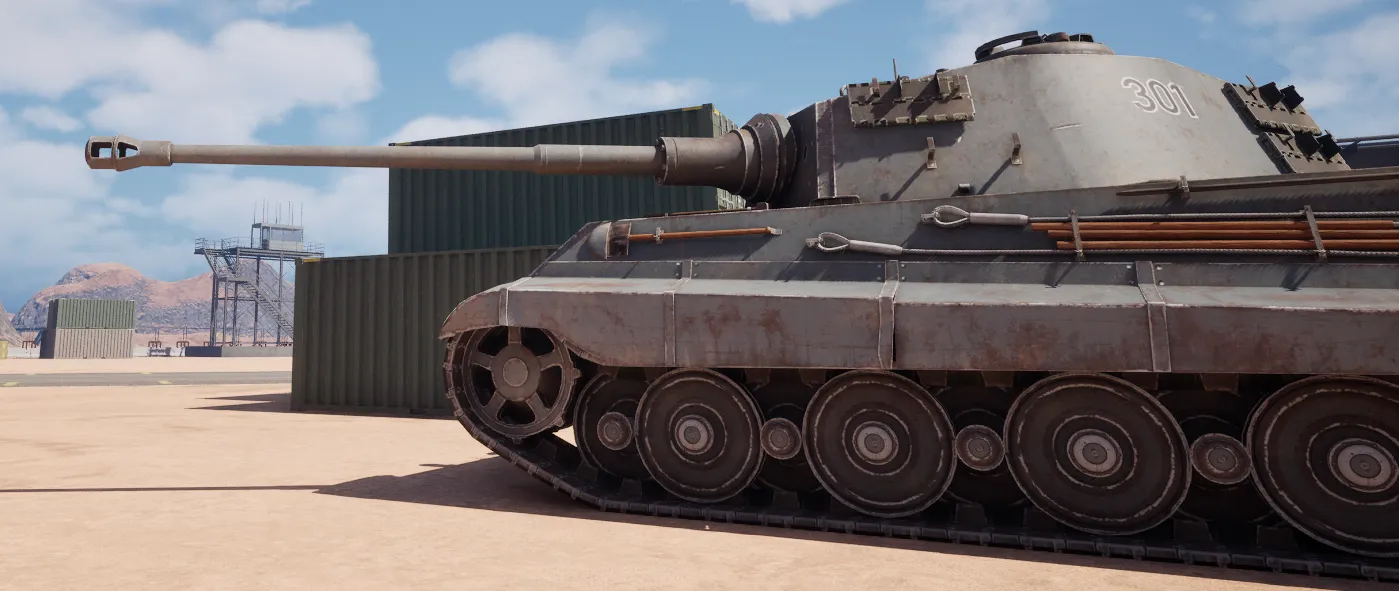
The 88, and 100 mm of frontal plate. Slow to manoeuvre, punishing at range: it holds its angle and fears being flanked.
The sky is empty.
Operation Serval has no air layer. That leaves one battlefield to balance, armour against armour, and every hour of development goes into it.
You choose what comes back first.
Three repairs waiting: track, gun, periscope. You choose which one comes back first, while the fight carries on.
No pay to win
Just cosmetics and comfort
- Paint. The vehicle underneath is untouched.
- Perks off the battlefield. Nothing that follows you into a match.
- The same ones everyone can obtain later, without paying.
- Crates
- Nothing is random. You see exactly what you are buying.
- An advantage
- A paid vehicle plays differently, at equal strength.
- Cashing out
- In-game currency cannot be converted back into real money.
Reinventing matchmaking.
Every vehicle carries a rating, from 1 for the weakest to 100 for modern armour. Matchmaking reads one of them: the highest in your lineup. Low on the scale the window stays tight and beginners stay among themselves; the higher you climb, the wider it opens.
The game’s evolution
Operation Serval opens on the Second World War. The period will widen both ways after that. Domination and capture are in the game, more PvP modes follow, then co-op and solo missions.
- Domination & capture
- More PvP modes
- Co-op & solo missionsafter PvP is solid
Latest news
What it takes to run it.
Operation Serval aims wide: it runs on modest machines and makes the most of stronger ones. Exact numbers on the right.
DownloadFollow the development
I post every step forward, and player feedback genuinely changes the game. Discord is the fastest way to reach me.